

Australia at the forefront of tracking our universe in real time

Australia is helping track millions of new asteroids, exploding stars, and other real-time changes in the night sky. The NSF-DOE Vera C. Rubin Observatory, a revolutionary new imaging system located in Chile’s Atacama Desert, has issued its first ~800,000 scientific alerts documenting every visible change it captures with the world’s biggest digital camera. Rubin will […]
The unseen engine

How Australia’s investment in research and infrastructure is forging global quantum leadership Over the past 20 years, Australia has quietly secured a position at the forefront of the quantum revolution. Not only are we building some of the world’s first commercial quantum computers but quantum science is being employed in a new generation of sensors, […]
The Australians helping uncover the blue universe

Australian researchers and engineers are helping design and deliver a new instrument for one of the world’s most productive telescopes. Australian researchers and engineers are helping design and deliver a new instrument for one of the world’s most productive telescopes. The Blue Multi Unit Spectroscopic Explorer (BlueMUSE) is an integral-field spectrograph destined for the European […]
Early warning from above! – how Gadi detects vegetation drought stress before it’s visible using a new satellite-based method

Droughts are one of Australia’s biggest natural hazards. They reduce crop yields, threaten livestock, reduce water storage volumes in dams, damage forests, and increase the risk of bushfires. Often, by the time plants show visible signs of stress, such as yellowing leaves and/or thinning canopies, the damage is already done. A team of researchers, led […]
ACCESS models help to unveil the causes of the unprecedented 2023 North Atlantic Ocean heatwave

A paper published recently in Nature using two ACCESS models, has revealed the drivers of a marine heatwave that swept across the North Atlantic Ocean during the summer of 2023, causing severe impacts on climate and ecosystems. “The intensity of the warming in that single summer was equivalent to about two decades worth of warming for the […]
AuScope in Antarctica: unlocking climate-response secrets hidden beneath the ice

Antarctica holds clues about how our planet is responding to climate change, and what that means for our future. AuScope is helping Australian researchers uncover critical new knowledge, by building and deploying polar-rated instrument sets that can withstand Antarctic extremes, drilling deep beneath the ice to retrieve ancient sediments, and developing software for modelling how […]
Supercharging Australian climate science: Australia’s Earth system model gets revamped for a clearer view of our future and past climate.

In short: Australia’s climate simulator (ACCESS-NRI) upgraded the ACCESS Earth system model to make it easier to use, ensuring reliable results and tailoring the code to the researcher needs. This sophisticated model provides a virtual laboratory for exploring Earth’s complex systems and has been widely used by the Australian climate research community, contributing to our understanding […]
Including land ice in the ACCESS Earth System Model: a community-led model selection approach

In short: ACCESS-NRI has adopted the Ice-sheet and Sea-level System Model (ISSM) as its support Ice Sheet model after an open and rigorous community-led selection process. What’s next?ACCESS-NRI will implement ISSM configurations of Antarctica and Greenland, with the ultimate goal to couple ISSM into ACCESS in order to improve decadal- to centennial-scale projections of global […]
Liquid lenses for better satellite monitoring

Heavy Ion Accelerator Facility’s Space Irradiation Beamline (HIAF-SIBL), hosted at the Australian National University, has played a vital role in an exciting first for the Australian space industry: the first time that Australian space radiation testing has been done on an Australian space payload. The occasion? Testing innovative liquid lenses that enable a satellite to […]
Data Without Borders: the role of Globus in international genome research
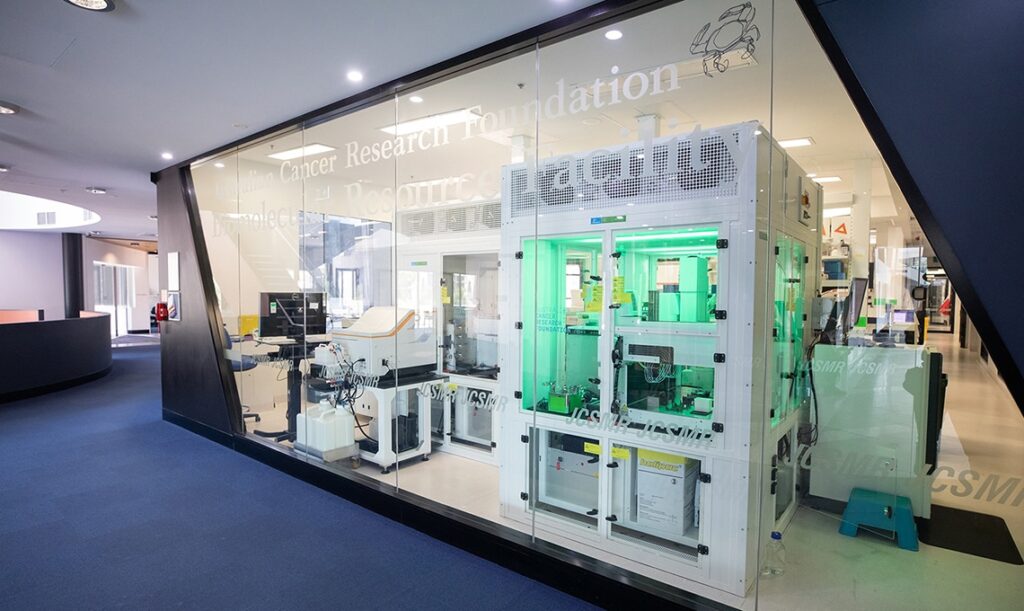
Genetics technical specialists at the Biomolecular Resource Facility are using the Globus data movement service through AARNet to share huge datasets with national and international collaborators. The Biomolecular Resource Facility (BRF) is located in Canberra within the John Curtin School of Medical Research at the Australian National University (ANU). As a core laboratory providing research […]
New native mice species

Two new native mice have scurried into the list of Australian mammal species! The words “species” and “Australia” are unfortunately traditionally linked to their disappearance from our continent’s highly biodiverse ecosystem. Following from last year’s discovery of a very much alive mouse species which was previously thought to be extinct in the wild, researchers have […]
Connecting the Community: the ACCESS-Hive User Hub

The ACCESS-Hive is an open-source collaborative portal developed by and for the community of users and developers of the ACCESS models. The ACCESS-Hive team l-r: Claire Carouge, Aidan Heerdegen, Romain Beucher, Heidi Nettelbeck and Roger Edberg. This portal includes access to all documentation relevant to the wider ACCESS community, as well as a platform for […]
Implanting a Revolution

Quantum computing is a revolution in progress, and Dr Shao Qi Lim is excited to be part of it. “I’m lucky to be part of this revolutionary field,” says Dr Lim, a postdoctoral fellow in the ARC Centre of Excellence for Quantum Computation and Communication Technology (CQC2T) based within the Experimental Condensed Matter Physics (ECMP) […]
Protein discovery for better bowel cancer treatments
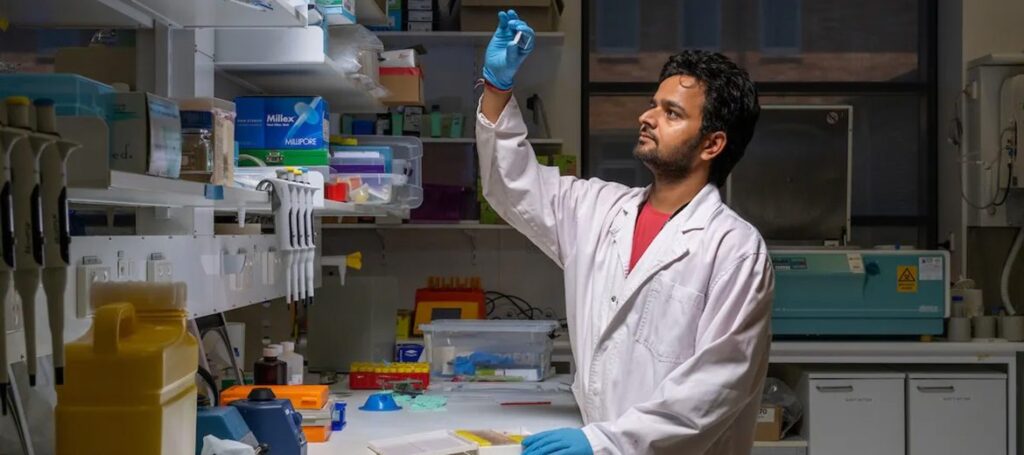
Bowel cancer claims more than 100 lives in Australia every week. Thankfully, researchers at the Australian National University (ANU) have discovered that an immune protein can slow the division of bowel cancer cells. This is a promising target for both early detection tests and bowel cancer treatments. DR ABHIMANU PANDEY SAYS AN IMMUNE SYSTEM PROTEIN […]
Integrated Earth 2023 conference highlights the ambition of Australia’s Earth science community

Members of the earth science community from all over Australia came to Canberra in September to take part in a unique gathering – the Integrated Earth 2023 conference. Supported by the Australian Academy of Science as an Elizabeth and Frederick White Conference, Integrated Earth brought together researchers from the five broad spheres of Earth science: […]
Biobanks: the Australian Phenome Bank

The Australian Phenome Bank: a national biobank and database aiding the discovery of genetic disease causes and advancing Personalised Medicine. Phenomics Australia’s Biobanking service provides a database and cryobank of mouse sperm and embryos essential for discovering and distributing disease models in Australia. The challenge: Ensuring the ongoing availability of mouse strains preserving the investment made in […]
Associate Professor Julia Bryant – The Hector instrument and Nicholas Hacko Watchmaker

Associate Professor Julia Bryant, Astralis-USyd – AAT’s Hector instrument and Nicholas Hacko Watchmaker A major new instrumentation project for the Anglo-Australian Telescope (AAT) has led to a partnership with one of the most specialised watchmakers in Australia. The instrument, Hector, is a multi-Integral Field Unit spectrograph built for the AAT by the Astralis Instrumentation Consortium. The […]
When food kills

Infrastructure and expertise supported by Phenomics Australia and Therapeutic Innovation Australia (TIA)are used in fighting food poisoning toxins. Prof Si Ming Man (right) and Dr Anukriti Mathur (left). Image Lannon Harley/ANU The challenge: Food poisoning is estimated to affect more than 4 million Australians every year – costing the economy $1.25 billion, and in some […]
Aussie perovskite solar cell breaks world record

More efficient solar cells are paving the way to cheaper and more sustainable energy. The silicon solar cells that currently dominate the market are plateauing in efficiency and are expensive to manufacture. Perovskite solar cells are a next generation alternative that are more efficient, easier to manufacture, and made of cheaper materials. However, these cells […]
Delivering Data to Improve Reporting on Australia’s Environment

Australia’s national research infrastructures are working together to streamline access to integrated data for State of the Environment reporting and other environmental assessments. The collaborative project is ensuring easy, open access to comparable, time-series datasets for key measures of the state of Australia’s environment and biodiversity. Every five years, the Australian Government delivers the State […]
AuScope underpins Julimar polymetallic minerals discovery

In November 2021, Chalice Mining Limited released a maiden resource statement for the Julimar polymetallic mineral deposit on Wadjuk Country in Western Australia. This is an exciting milestone for Chalice on the path to delivering palladium, nickel, copper and platinum for clean energy technologies. Equally impressive is the decades-long backstory to the Julimar discovery, which […]
AuScope earthquake hunters catch record-breaking quake
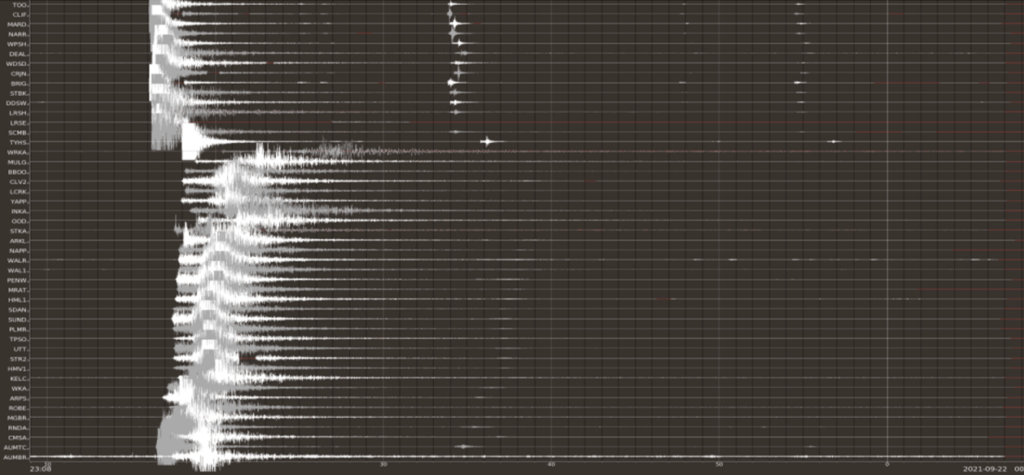
Hold onto your coffee cups and comfort the dog. This morning’s earthquake in southeastern Australia, which is perhaps the largest in the region in 200 years, thankfully has not yet caused any injuries. It has, however, provided AuScope geoscientists with the opportunity to put their earthquake hunter hats on and investigate this record-breaking moment. Here […]
WearOptimo create real-time, Microwearable health sensors

WearOptimo have used Microscopy Australia’s facilities to develop a world-first, wearable, real-time health sensor, which is now in clinical trials. WearOptimo aims to provide affordable, wearable technology to revolutionise monitoring of biomarkers, which act as an early warning sign of disease. Initially, their sticker like device will provide real time monitoring of hydration and of heart […]
From planets to pandemics: translating science in challenging times

After years of building NCRIS enabled software to address geodynamics problems, researcher and AuScoper from The University of Melbourne, Rohan Byrne, found an opportunity to turn his Everest code to help model COVID-19 mobility data during Melbourne’s 2020 and 2021 lockdown periods. Here, Rohan shares his story. JC — Rohan, please tell us what you […]
The risk of ‘Mr Fluffy’ insulation

When Australian National University epidemiologist Associate Professor Rosemary Korda first started holding public forums for Canberra residents affected by ‘Mr Fluffy’ insulation, people were very distressed. “There was quite a bit of anger in the room, and pretty upset people,” she remembers. “There were definitely people who were very concerned about future health effects of the […]
Australian cities are quiet during lockdown. Earthquake scientists are making the most of it
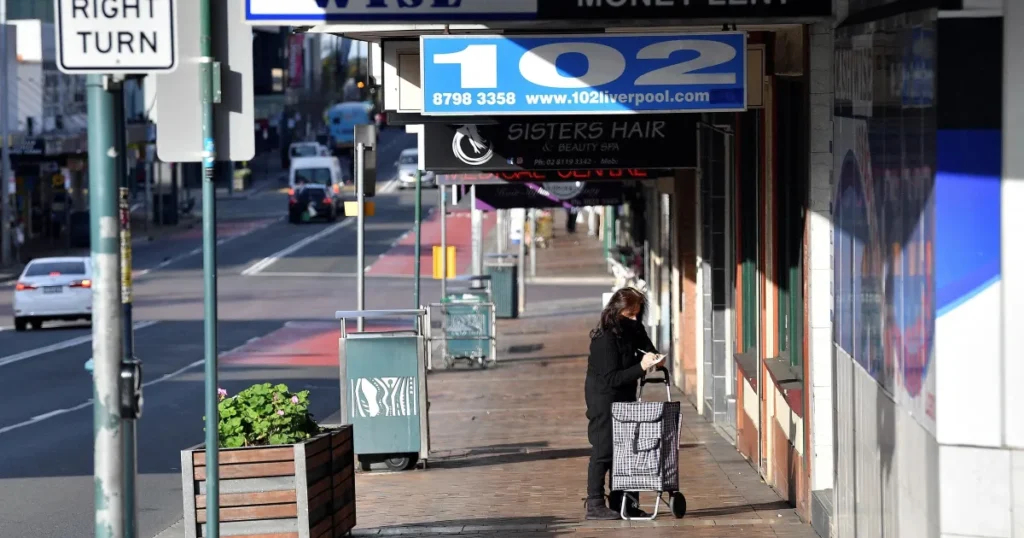
Our responses to the COVID-19 pandemic have dramatically changed human activity all over the world. People are working from home, schools are closed in many places, travel is restricted, and in some cases only essential shops and businesses are open. Scientists see signs of these changes wherever they look. Carbon dioxide emissions are down, air […]
Cleaning the Sydney Harbour Bridge

The Sydney Harbour Bridge was opened in 1932 and not surprisingly, is a heritage-listed structure. A mammoth effort is required to look after the Bridge to keep it looking its iconic best. Cleaning the paint and stone, and replacement of aging and damaged paint is a major part of this. Dirt, rust and the existing […]