

Making history at The Plant Accelerator®

The Australian Plant Phenomics Network (APPN) Adelaide Node, The Plant Accelerator® (TPA), passed two significant milestone during 2025 with imaging of the 100,000th plant in their high-throughput conveyor-based imaging system (Smarthouse), and 15 years of national and global leadership in high throughput plant phenotyping (HTPP). TPA® was established to provide researchers with advanced plant phenotyping tools to […]
Australian technologies on the path to real-world use

The Australian National Fabrication Facility (ANFF) works with small and medium enterprises (SMEs) as they develop new technologies and devices and move them beyond the lab. For many SMEs, this is the stage where ideas become physical, functional and repeatable. Access to the right tools, facilities and hands-on expertise makes the difference between something that […]
The unseen engine

How Australia’s investment in research and infrastructure is forging global quantum leadership Over the past 20 years, Australia has quietly secured a position at the forefront of the quantum revolution. Not only are we building some of the world’s first commercial quantum computers but quantum science is being employed in a new generation of sensors, […]
EMBL Australia PhD Course celebrates 10 years of training Australia’s future research leaders

More than 60 PhD students from across the country came together in Adelaide for the 10th EMBL Australia PhD Course – a unique, two-week residential program designed to equip emerging researchers with the skills and confidence needed for modern scientific careers. Co-hosted with the South Australian Immunogenomics Cancer Institute (SAiGENCI), this year’s course focused on future-ready […]
Listening to the ancient world beneath our feet to support critical mineral discovery

At the border of South Australia and New South Wales lies the Curnamona Province, a region that holds an untold story about Earth’s evolution over billions of years. By using NCRIS-enabled infrastructure, researchers are building a detailed 3D model of the Province, known as the ‘Curnamona Cube.’ The Cube reveals the hidden geological history of […]
NCRIS facilities support research to boost cereal fertilisation and yield

A research team at the University of Adelaide, led by Professor Matthew Tucker, has identified a protein called MADS31 that is important for seed production in barley and bread wheat. Enabled by two NCRIS facilities, Microscopy Australia and the Australian Plant Phenomics Network, this knowledge is vital for developing new genetic strategies to protect and […]
The future of gold is green: new tech recovers the precious metal without pollution

New technology out of Flinders University uses harmless chemicals to make a unique polymer that specifically binds to gold, making it possible to extract and concentrate gold from complex sources such as ore and e-waste. Scanning electron microscope image of the sulfur-based polymer showing bound gold (red). Sulfur shows as yellow and carbon as blue. […]
Supercomputing powers the fight to accelerate phage therapies against antibiotic-resistant infections

NCI, Pawsey, and ARDC help researchers rapidly identify therapeutic phages from metagenomic data through the powerful new Sphae toolkit. Flowchart of Sphae’s modular process for predicting suitable phages for antimicrobial therapy. Antibiotic resistance is one of the most pressing global health threats of our time, prompting scientists to urgently explore alternative ways to combat deadly […]
Research Impact: Assessing “Child-Friendliness” as a Pathway to Reducing Private Car use for Children’s Transport

The journey to school is a vital part of a child’s physical, psychological, and social development. It offers children an opportunity to interact and emotionally engage with the world around them, building self-possession and independence. However, in Australia, the heavy reliance on cars to transport kids to and from school inhibits this, as well as […]
Research Impact: Measuring the Age-Friendliness of Australian Suburbs

Australians are ageing at an unprecedented rate. As people get older, frailty and increased use of health resources pose a significant challenge to already strained health services. It is vital to keep ageing populations healthy to not only reduce this dependence on services but also to promote their wellbeing, independence, and participation in society. This […]
Making visible the impact of Australia’s national microscopy infrastructure

Through trust and identity, the impact of Australia’s distributed microscopy infrastructure will be revealed. Microscopy Australia is a consortium of university-based microscopy facilities that provides more than 3,500 Australian researchers a year, with access to state-of the-art microscopes. Through access to their facilities, crucial research is enabled in areas such as future energy innovations, improved […]
Quantifying seabed habitats and associated biota in the Murray Australian Marine Park

Background While detailed habitat mapping coverage has been substantially advanced by State governments in many coastal regions, Commonwealth waters of the continental shelf typically lack detailed habitat maps and, at best, have coarse resolution bathymetric layers. Focusing on the Murray Marine Park, this voyage aimed to fill key information gaps in our knowledge of the […]
New brain imaging set to improve and speed epilepsy diagnosis, treatment
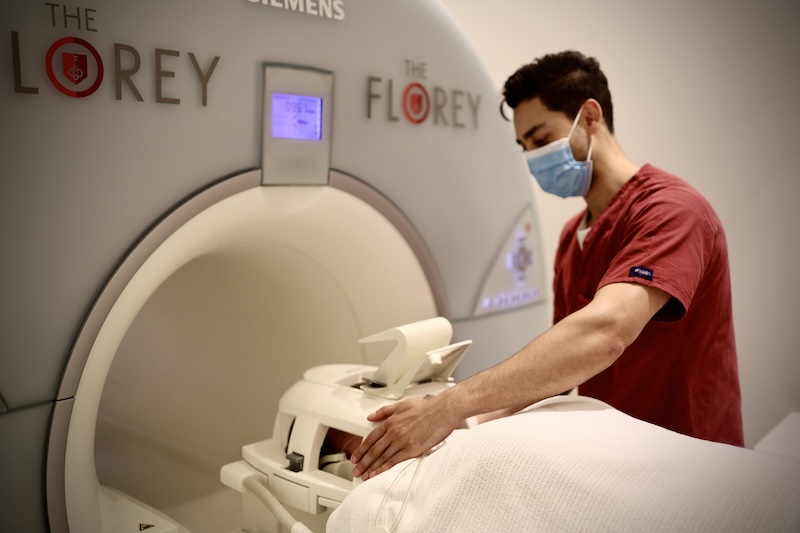
Novel imaging methods combined with cognitive, genetic and medical data will use AI to increase the speed and accuracy of diagnoses and treatment for epilepsy patients, according to researchers working collaboratively with NIF. Advanced MRI imaging methods are helping Australian epilepsy researchers move closer to faster, more accurate, individualised diagnoses and treatment options for patients. […]
Supporting Australia’s food security and agriculture industry

Over 90% of fruit, vegetables, meat, milk, and eggs sold in Australia are domestically produced, and over half of Australia’s agricultural produce is exported. As an important contributor to the Australian economy, the gross value of Australia’s agricultural food production is forecast at $79 billion for 2023-24, and our agricultural exports are forecast at $65 […]
Enhancing Resilience and Flavor in Plant-Based Proteins: The Plant Protein Atlas Initiative

With the world’s population expected to reach unprecedented levels by 2050 and a 73% projected increase in meat consumption, there is an urgent need to double food production. Australia’s plant protein market is poised to reach an estimated value of $18 billion (AUD) by 2032, while the global plant protein food sector is projected to […]
New native mice species

Two new native mice have scurried into the list of Australian mammal species! The words “species” and “Australia” are unfortunately traditionally linked to their disappearance from our continent’s highly biodiverse ecosystem. Following from last year’s discovery of a very much alive mouse species which was previously thought to be extinct in the wild, researchers have […]
Nanocluster Catalysts Remove Toxic Organic Chemicals from Wastewater

Water contamination from dyes used in food, cosmetics, textiles, and other production processes has become a major ecological problem. Numerous chemical companies, such as those that produce textiles, cosmetics, and dyes, discharge hazardous and non-biodegradable dyes into the environment. Azole dyes, including methyl orange, make up over half of the dyes used in the textile […]
Breaking the Cycle

Data linkage is helping researchers understand the lifelong impact of child abuse and neglect, and how they entrench intergenerational disadvantage. Every year, 1 in 20 Australian children will be reported to child protection. One in 50 children will be the subject of an investigation by authorities and 1 in 100 will have that report substantiated. […]
Clinical Trial Data Unlocked for Research with New National Platform

Health Data Australia is unlocking clinical trial data for research at a national scale. For the first time in Australia, researchers can find clinical trial data from multiple research institutions and request access to it via a new platform, Health Data Australia. Launching tomorrow at SAHMRI in Adelaide, Health Data Australia allows clinical trialists and data […]
A One Health approach to Japanese encephalitis
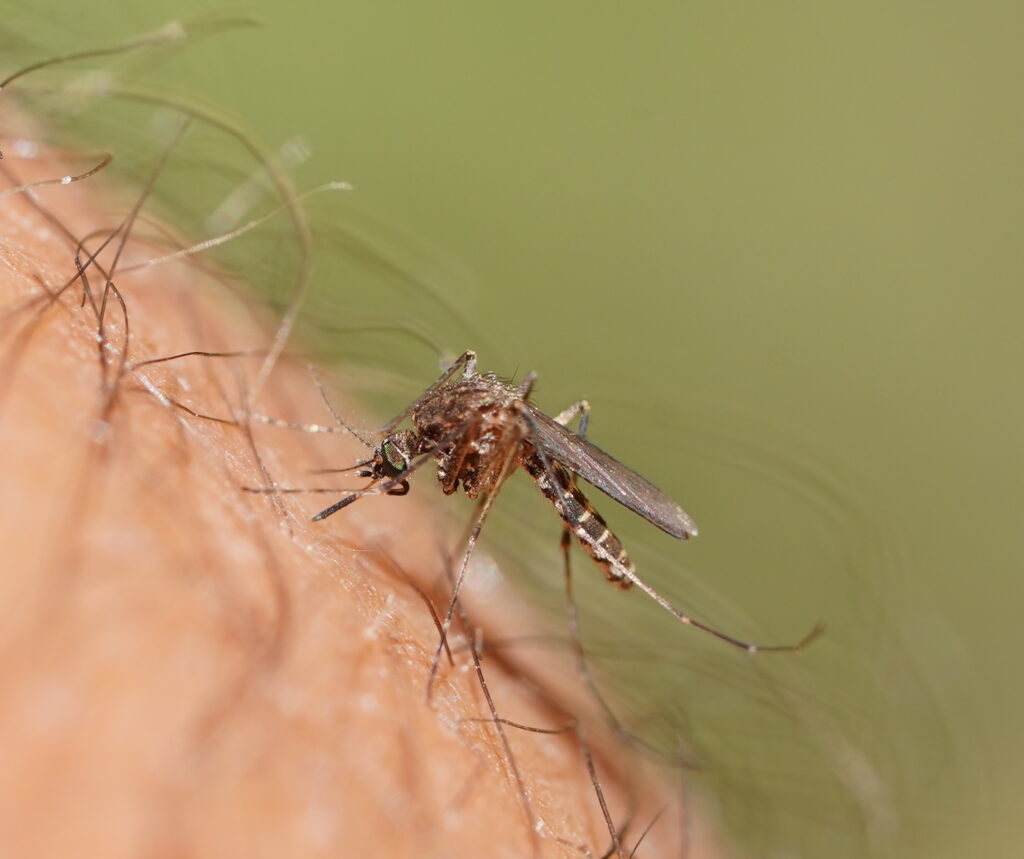
Scientists at CSIRO’s Australian Centre for Disease Preparedness (ACDP) provided diagnostic testing and outbreak response support when a widespread outbreak of Japanese encephalitis occurred in piggeries in southern Queensland, New South Wales, Victoria and South Australia. What is Japanese encephalitis? Japanese encephalitis (JE) virus is a potentially fatal disease that infects about 100,000 people worldwide […]
Delivering Data to Improve Reporting on Australia’s Environment

Australia’s national research infrastructures are working together to streamline access to integrated data for State of the Environment reporting and other environmental assessments. The collaborative project is ensuring easy, open access to comparable, time-series datasets for key measures of the state of Australia’s environment and biodiversity. Every five years, the Australian Government delivers the State […]
AuScope underpins Julimar polymetallic minerals discovery

In November 2021, Chalice Mining Limited released a maiden resource statement for the Julimar polymetallic mineral deposit on Wadjuk Country in Western Australia. This is an exciting milestone for Chalice on the path to delivering palladium, nickel, copper and platinum for clean energy technologies. Equally impressive is the decades-long backstory to the Julimar discovery, which […]
Revamped Rapid IdP Lowers the Bar for Australian Access Federation Participation

Thanks to investment from the Australian Research Data Commons (ARDC), the new Rapid Identifier Provider, or Rapid IdP, is making it easier for Australian research institutions to participate in the AAF. Researchers at institutions like SAHMRI are now able to access hundreds of online platforms with a single sign on thanks to Rapid IdP. Image […]
A wonder material made from waste

In February 2020, Clean Earth Technologies (CET) signed an agreement with Flinders University to produce commercial quantities of an environmental wonder material. Developed by Prof. Justin Chalker and his team at Flinders University, this novel polymer — made exclusively from waste materials — is capable of pulling oil from the oceans and contaminants like mercury […]
New Era in X-Ray Imaging

Next generation X-ray technology, developed and manufactured in Adelaide, is solving global health, defence and security challenges by making X-ray machines significantly lighter and more portable. In-depth imaging is now available on the move thanks to Adelaide-based medical device manufacturer, Micro-X, which has commercialised a new way of producing x-rays. The ASX-listed company is harnessing […]
Super-charging next-gen solar panels with phosphorene

Researchers at Flinders University have made significant increases in efficiency in several emerging solar cell technologies using phosphorene – a 2D form of phosphorus only a few atoms thick – along with developing a cheaper, faster way to produce it. In a world in need of cheaper, sustainable and clean energy solutions, solar is an […]
Making mining models with magnetic minerals
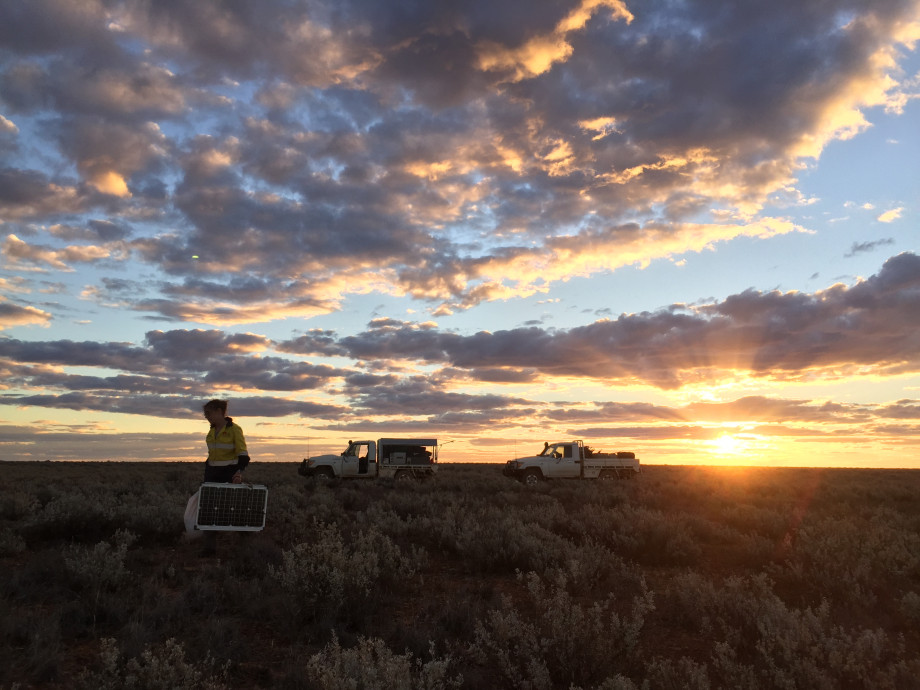
Australian Geophysicists are mapping the possible location of economic mineral deposits in South Australia and relying on the NCI to produce advanced 3D models of the subsurface. The great challenge of this work is that over 80% of the surface of the state is covered by younger sediment, such as vast fields of sand dunes, […]